Psilocybe mexicana is a types in the team of psilocybin mushrooms (also consisting of P. tampanensis, and to a lesser degree P. cinctulus) that are recognized to produce sclerotia– solidified masses of mycelium that operate in nature as a means for the microorganism to endure unfavorable conditions (nutrient exhaustion, drought, freezing, etc). You might listen to the sclerotia of these types likewise called truffles, but technically this is an organic misnomer. From a mycological viewpoint, unlike sclerotia, truffles are reproductive structures– below ground spore containers that spread their genetic haul via consumption by pets as well as succeeding discharging into brand-new atmospheres. True truffle-producing species are usually ectomycorrhizal, implying their existence relies on a symbiotic connection with particular host tree varieties. Determined in close closeness to a range of trees, P. mexicana’s liked environment is manure-rich meadow, which triggered Paul Stamets to nickname these the “Mexican freedom cap” due to the two types’ fondness for comparable environments.In most nations where psilocybin having mushrooms are currently illegal, P. mexicana is no various.
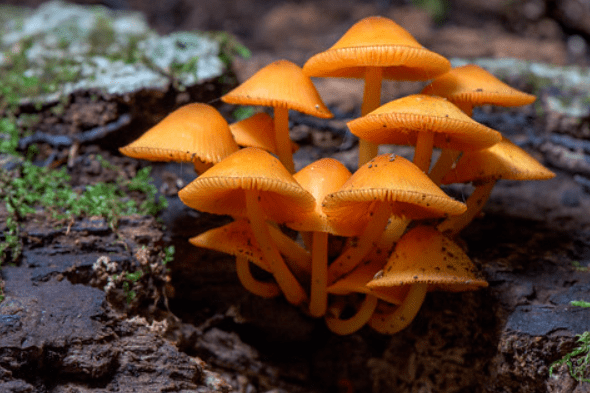
The sclerotia created by P. mexicana are a lumpy package of largely stuffed mycelium, which can vary in size from smaller sized than a pea to as big as an ostrich egg, but are seldom as uniform fit. The color of sclerotia seems to rely on growing conditions, and also can vary from light yellow to dark brownish, and also blue in places. Because of their irregular form, dimension, and color, a positive recognition is rarely feasible from the sclerotia alone (for that we must look at the mushrooms themselves). As the “Mexican liberty cap”, psilocybe mexicana shares some comparable features with its even more globally distributed namesake. P. mexicana are tall, thin mushrooms with straw-colored stems with the ability of maturing to an optimum elevation of around 5 inches. Their caps are convex or cone-shaped, in some cases with an increased area in the center (umbonate) or margins that flare out to appear like a bell (campanulate). Like all psilocybin producing species, P. mexicana mushrooms have a purple black spore print and bruise blue when harmed.
Early explores research laboratory cultivated stress of P. mexicana suggested that sclerotia production is preferred by dark, nutrient-rich conditions whereas mushroom production was favored by when societies were revealed to daylight in growth media that are much less vitamins and mineral abundant. From an organic perspective this makes sense; provided the feature of sclerotia to serve as a survival framework, high nutrients would certainly create problems that promote accumulating supplies for times when conditions could not be so abundant. By comparison, in reduced nutrient conditions, mushrooms and their resultant spores would provide the organism a chance to leave their bad expanding problems for a new begin someplace more favorable. Although this hasn’t been verified scientifically, several anecdotal reports from house farmers state that when a P. mexicana grow has begun creating sclerotia, future mushroom production is much less likely. Psilocybe Mexicana has a illustrious and also long history in the world of psychedelics. Albert Hofmann (who initially synthesized LSD) got this strain of Psilocybe cubensis, the world’s most common magic mushroom varieties, and extracted as well as identified psilocybin as the active element. Psilocybe Mexicana was the forerunner of modern-day magic mushroom and truffle farming.Mexicana An and Mexicana B are two sub-strains of the Mexicana strain. Just Mexicana A produces sclerotia, which is an additional term for truffles, which are the below ground part of a mushroom. Consequently, all of our Psilocybe Mexicana truffles are Mexicana A truffles by necessity.Mexicana truffles are instead weak, as a result their effects are much more soft than those of numerous other kinds. Since a result, they’re suitable for novices, as there’s minimal chance of overdoing it. Mild visuals, a “opening” of cognitive procedures, greater level of sensitivity to stimuli, and an overall capacity to find things extremely funny are several of the side effects.As previously said, these truffles get on the lower end of our range. On average, 5 grams is thought about a moderate dosage, with noticeable but light results. With 10 grams, you’ll have a modest trip with significant aesthetic as well as bodily impacts, but nothing also intense. The advantages will certainly end up being considerably better after you reach about 15 grams. This is the point at which the majority of people recognize they’re in for a good vacation.The most uncomplicated strategy to take in Mexicana truffles is to just eat them raw. Attempt making a tea rather if you don’t like the taste. If you do this, do not place the truffles in boiling water given that the psilocybin will certainly be damaged, as well as you won’t obtain high!
 Mushroom Teonanacatl